1st May 2023
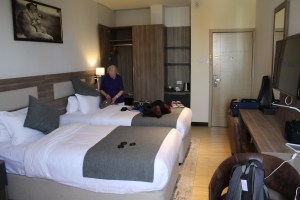
Our flight today was at 10:45 am. We had arranged with our guide to be picked up from the hotel at 8:00 am, so we were at breakfast for 7:00 am, all packed and ready to go.
It was only a short drive to the airport, and along with three other members of our group who were on the same flight, we stepped off the shuttle bus at 8:30 am, only to discover that our passports had to be scanned before we could even enter the building. This was the first of many checks we had to endure before boarding the aircraft.
Once inside, we immediately joined a very long queue to have our cases and belongings scanned (including shoes, belts, watches, etc.). As expected, I was called aside by a security operative to open my suitcase and show my binoculars. I explained that the key to unlock it was in my rucksack, which was still going through the scanner. By the time it finally emerged from the bowels of the machine, and I offered to open the case in front of him, he had lost interest and simply waved me through.
Rejoining Sue, we made our way to the check-in area, only to find a horrendously long, snaking queue, caused by the fact that only two desks were operating. It took us half an hour to get our boarding passes and watch our suitcases (complete with binoculars) disappear along the conveyor belt.
Next came another ridiculously long queue for passport control, but not before another round of disrobing and hand luggage scanning. With time now running short, we hurriedly checked the gate number, only to find that our flight was already boarding. No chance to browse duty-free or spend our remaining Birr!
Marching quickly through the terminal, we discovered that Gate 16 was the furthest away. We picked up the pace, only to be stopped near Gate 14 by yet another queue, this time for another scan and identity check. Here, they seemed particularly focused on matching passport photos with passengers’ faces. Many people in front of us had to remove their glasses, and in some cases, a second staff member had to confirm the decision. Some were even asked for an alternative ID. The process took ages, but thankfully, when we reached the front of the queue, our European passports saw us waved through with minimal fuss.
At last, we arrived at Gate 16 and quickly joined the line boarding the aircraft. Within fifteen minutes, we were seated and settling in for the seven-and-a-half-hour flight, which, fortunately, went smoothly.
SUMMARY:
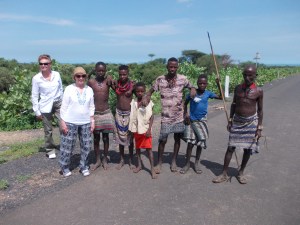
Ethiopia is a vast country with spectacular scenery. It features an extensive highland complex of mountains and dissected plateaus, divided by the Great Rift Valley, which runs from the southwest to the northeast and is bordered by lowlands, steppes, and semi-desert regions. Ecologically, the country is highly diverse, ranging from arid deserts along the eastern border to tropical forests in the south. In the north lies Lake Tana, the source of the Blue Nile.
The population is equally diverse, comprising over 80 distinct ethnic groups. The four largest are the Oromo, Amhara, Somali, and Tigrayan peoples. Ethiopia is also of great historical and anthropological significance, as one of the earliest known sites of human origins. The discovery of ‘Lucy’, a famous hominid fossil, highlighted this heritage. The oldest human remains found in the country, the Omo fossils, were excavated in the southwestern Omo Kibish area and date back to the Middle Palaeolithic period, approximately 200,000 years ago.

Not a moment of our adventure in this remarkable country was without wonder, respect, and, at times, a touch of apprehension. Our visit to Lalibela in the north, with its unique culture and extraordinary rock-hewn churches, was especially moving. It was a time filled with deep emotion and a profound appreciation for the dignity of its people and their way of life, built upon religious ideals that stretch back through the mists of time.
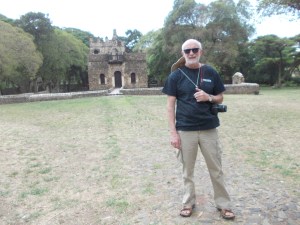
Our time in the south, visiting various tribes, was an experience we will never forget. The diversity of lifestyles and customs, often the subject of documentaries, was fascinating, and it felt a real privilege to witness them before they become too heavily influenced by the modern world.
Among others, we visited the Mursi tribe, who live a traditional tribal lifestyle. They have their language and practise a form of animism. The women still wear distinctive lip plates, and both men and women engage in body painting, which serves various purposes, including healing. Also memorable were the Hamar tribespeople, known for their dramatic bull-jumping ceremony, a rite of passage into adulthood. As part of this ritual, women willingly endure whipping, wearing their resulting scars with pride.
At times, we felt like observers of the last flickering embers of a once-great and unique way of life.
As long-time admirers of artistic culture from across the world, we found Ethiopian art and music to be among the most interesting and pleasing we have encountered. Though much of it is shaped by religious influence, its simplicity and distinctive form provide a refreshing contrast to the artistic traditions we have seen elsewhere.


The lingering effects of recent conflicts in the country are far less pleasing, particularly noticeable in the north, though evident wherever one travels. The widespread emphasis on security reflects a deep mistrust between the people and their government. For us as Britons, it is deeply unsettling to see both military personnel and civilians openly carrying firearms. This sense of unease became painfully real when we inadvertently joined a funeral procession for two 18-year-old soldiers recently killed in an incident. Confusingly, we were told that government-backed rebels were to blame.
The political landscape is riddled with intrigue, corruption, and suspicion, and I fear for the future of the Ethiopian people. Nearly everyone we encountered during our two-week stay was warm, welcoming, and full of smiles. However, on the few occasions we came face-to-face with members of the Federal Army, we couldn’t help but feel wary, even afraid. Handing heavy-calibre weapons to sixteen-year-olds is, in our view, both reckless and dangerous, a recipe for inevitable disaster.
At the numerous checkpoints we passed, the tension between the Amhara militia and the Federal Army was palpable. The mutual hostility was clear to see, and I would not be surprised if the current peace process were to unravel through conflict between these two groups.
If peace can be maintained, and if Ethiopia embraces a democratic path of dialogue and debate, then I would wholeheartedly recommend visiting this extraordinary country, preferably before it becomes too swept up in modernity and its rich cultural heritage fades beneath the tide of fast food and soap operas.


Leave a comment